

Gas Piping CSST and Appliance Connectors


What's the difference between the 3 images? Two are versions of the same thing, and the other is different. Let's discuss that.
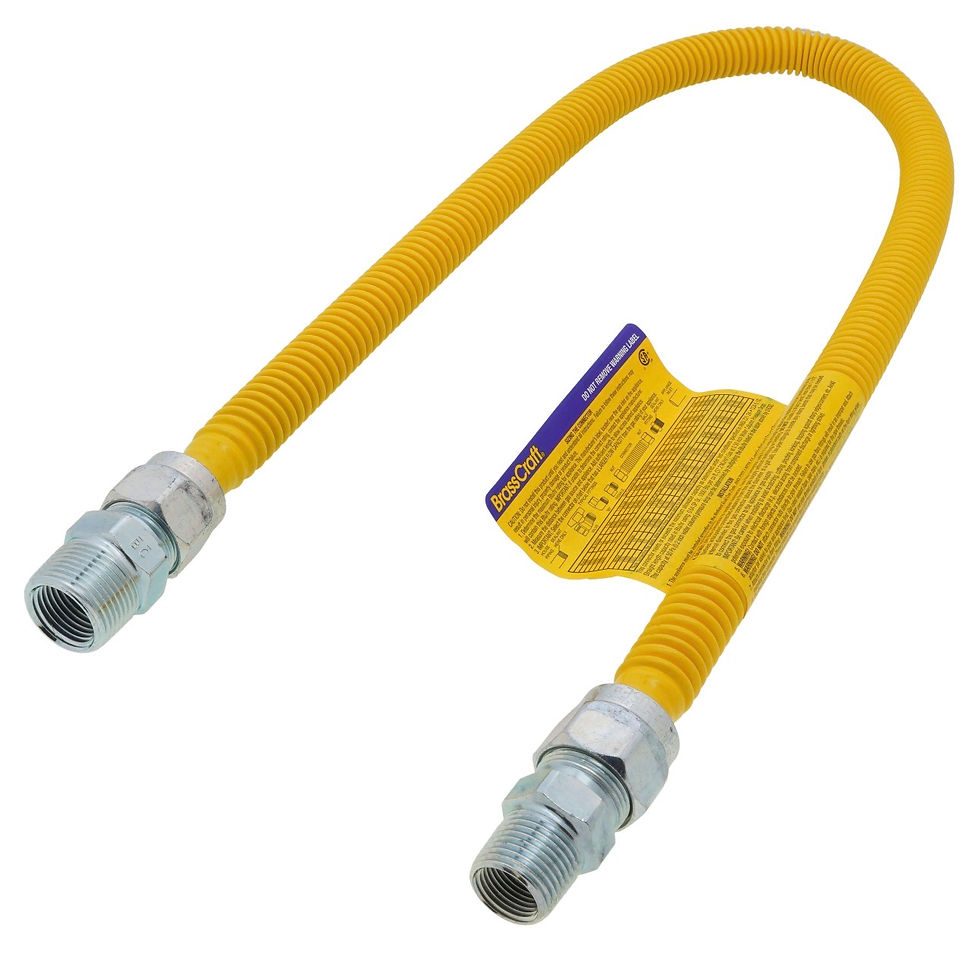
Yellow and black flexible tubing called corrugated stainless steel (CSST) pictured above are products that have been around for many years. This flexible gas line is easier and more flexible to work with and I would say preferred by installers for that reason. There are nuances with this type of piping that will require more attention, mainly electrical bonding of these gas lines. This is due to the thin wall (hence flexible) in this design. Lightning strikes can melt a pinhole in this tubing and cause leaks. For real, it sounds crazy, but the City of Maple Grove will not allow CSST unless it is "Arc shielded." Not to delve too deep into this, the CSST gas line is required to have an electrical bond (sometimes) to basically something in the house with the exception of the intersystem bonding terminal located at the exterior of the house, oftentimes by the electrical meter and meant for grounding of TV, phone, or other low voltage systems.

Proper bonding of these gas lines would look like a 6 AWG wire minimum, not run more than 75' to its ground connection.

I say sometimes because if the jacket of the CSST, be it black or yellow, is listed as an "arc-resistant" jacket, then the bonding requirement does not exist. Maybe I should say differently, in that the equipment ground of the appliance the gas line is connected to is adequate. Of course, this arc-resistant material is disguised under many brand names and is sometimes tricky to determine. Names like "flak jacket," "flash shield," "AR," and a thousand other names make it sound more like you're shopping for ammunition than gas supply piping. Who'd have thought? I think in today's day and age, snapping a picture of the specific label printed on the jacket and having "AI" help identify the material may be wise. Often, the gas electrical bond will be similar to the picture above, on the gas manifold, near it, or outside on the gas meter.


Here is a quick code link for reference.
All that being said, that brings us to gas appliance connectors. These are yellow and flexible and have their own set of rules. They are often confused with CSST due to their appearance but are generally small in diameter (but not always). These flexible connectors are meant to run from the permanent piping installation or stub-out gas valve to the appliance, such as a kitchen range or clothes dryer. The most common violation of rules that I see with these is that they pass through the floor, wall, or appliance "case," and they cannot.

We just touched on a few common points here and hope this brings some awareness or thought to gas piping. As I always recommend, if you smell gas, that smell does not indicate the quantity of gas, just the fact that it's there. A little gas smell doesn't mean a little gas. If you smell gas, leave and call 911. It's not something to mess with.


Comments